Budgeting Methods
The Definitive Guide to Strategic Capital Allocation and Cash Flow Management
In the advanced study of personal microeconomics and wealth management, a budget is far more than a restrictive ledger of historical expenses; it is a forward-looking, algorithmic framework designed to optimize capital allocation. At its core, budgeting is the systematic mechanism through which an economic unit (an individual or household) asserts total directional control over its cash flow. It ensures that finite financial resources are deployed with maximum efficiency to satisfy immediate physiological and operational needs, service existing liabilities, and aggressively fund long-term wealth accumulation vehicles. Without a rigorously structured budget, households inevitably fall victim to Parkinson's Law of Triviality—the economic phenomenon where expenditures subconsciously expand to consume the entirety of available income, resulting in chronic wealth stagnation regardless of top-line revenue growth.
Because individual cash flow dynamics, psychological risk tolerances, and behavioral tendencies vary so significantly across the population, there is no single, universally superior approach to capital allocation. Financial economists and Certified Financial Planners (CFPs) have developed a variety of standardized budgeting methodologies, each engineered to solve specific behavioral failures or structural cash flow irregularities. Selecting the optimal methodology is not a matter of subjective preference; it requires a diagnostic evaluation of the individual’s income volatility, cognitive discipline, existing debt burden, and their systemic need for either behavioral friction or technological automation.
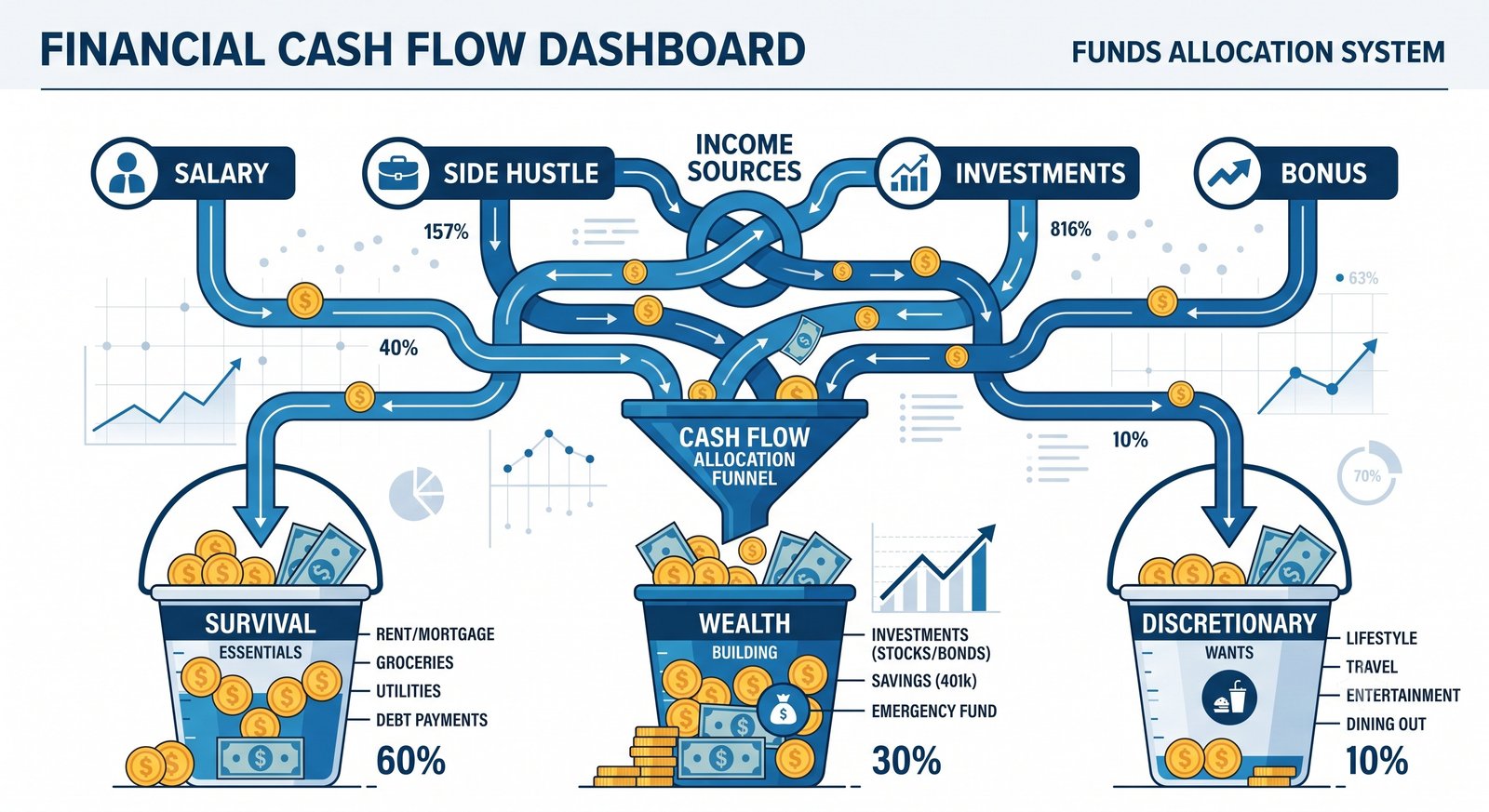
1. The Macroeconomic and Psychological Foundations of Budgeting
To understand why different budgeting methods succeed or fail, one must first analyze the fundamental behavioral economics governing human consumption. The primary adversary of wealth accumulation is the Marginal Propensity to Consume (MPC). In macroeconomic theory, MPC measures the proportion of additional income that an individual will spend on consumption rather than saving. For the vast majority of the unbudgeted population, the MPC approaches 1.0; meaning every new dollar earned is immediately absorbed by lifestyle upgrades, commonly referred to as lifestyle creep. Budgeting methodologies act as a mathematical countermeasure to MPC, forcing the individual to decouple their consumption patterns from their revenue generation.
Furthermore, effective budgeting addresses the concept of Mental Accounting, a cognitive bias identified by Nobel laureate Richard Thaler. Humans naturally assign subjective, irrational values to money based on its source or intended use. For instance, a tax refund is frequently viewed as "free money" and squandered on luxury goods, whereas regular salary is guarded carefully. Structured budgeting forces all capital—regardless of its origin—into a singular, objective logical framework. Whether the method relies on strict mathematical percentages, granular line-item assignments, or behavioral friction, the ultimate goal is to bypass human emotional volatility and enforce rational, long-term capital deployment.
2. The Proportional Allocation Approach (The 50/30/20 Rule)
The 50/30/20 budgeting framework is a top-down, macroeconomic approach to personal capital management. Popularized by Senator Elizabeth Warren and Amelia Warren Tyagi in their 2005 book All Your Worth: The Ultimate Lifetime Money Plan, this methodology divides an individual's Net After-Tax Income (NATI) into three rigid, proportional categories. It is highly favored by high-income professionals and individuals who seek a functional baseline framework without the cognitive exhaustion of tracking every individual micro-transaction.
The foundational mathematical formula governing this method is straightforward:
NATI = (0.50 × Needs) + (0.30 × Wants) + (0.20 × Savings/Debt Reduction)
- 50% Needs (Non-Negotiable Baseline Survival): Exactly half of the net income is strictly capped to cover absolute survival necessities and legal obligations. This includes primary housing costs (rent, mortgage principal, interest, property taxes), essential baseline utilities (water, electricity, basic telecommunications), critical groceries (excluding dining out), minimum contractual debt payments, and mandatory health or auto insurance premiums. If an individual's "Needs" exceed 50% of their net income, it signals an immediate structural crisis requiring radical lifestyle downsizing (e.g., relocating to cheaper housing) or aggressive top-line revenue expansion.
- 30% Wants (Discretionary Consumption): This allocation covers non-essential lifestyle enhancements and psychological utility. Categories include restaurant dining, entertainment, vacations, luxury apparel, subscription services, and premium gym memberships. Capping this at 30% is the critical mechanism that prevents lifestyle creep from silently eroding the individual's wealth-building potential as their income grows over their career.
- 20% Savings, Investments, and Debt Amortization: The final portion is aggressively deployed toward permanent net-worth expansion. This capital must be routed into emergency contingency funds, injected into equity markets (index funds, mutual funds), utilized to maximize employer-matched retirement accounts, or deployed as accelerated principal payments against high-interest consumer debt. For individuals behind on retirement targets, this percentage is often adjusted upward (e.g., to a 50/20/30 ratio) to accelerate compounding.
3. Zero-Based Budgeting (ZBB)
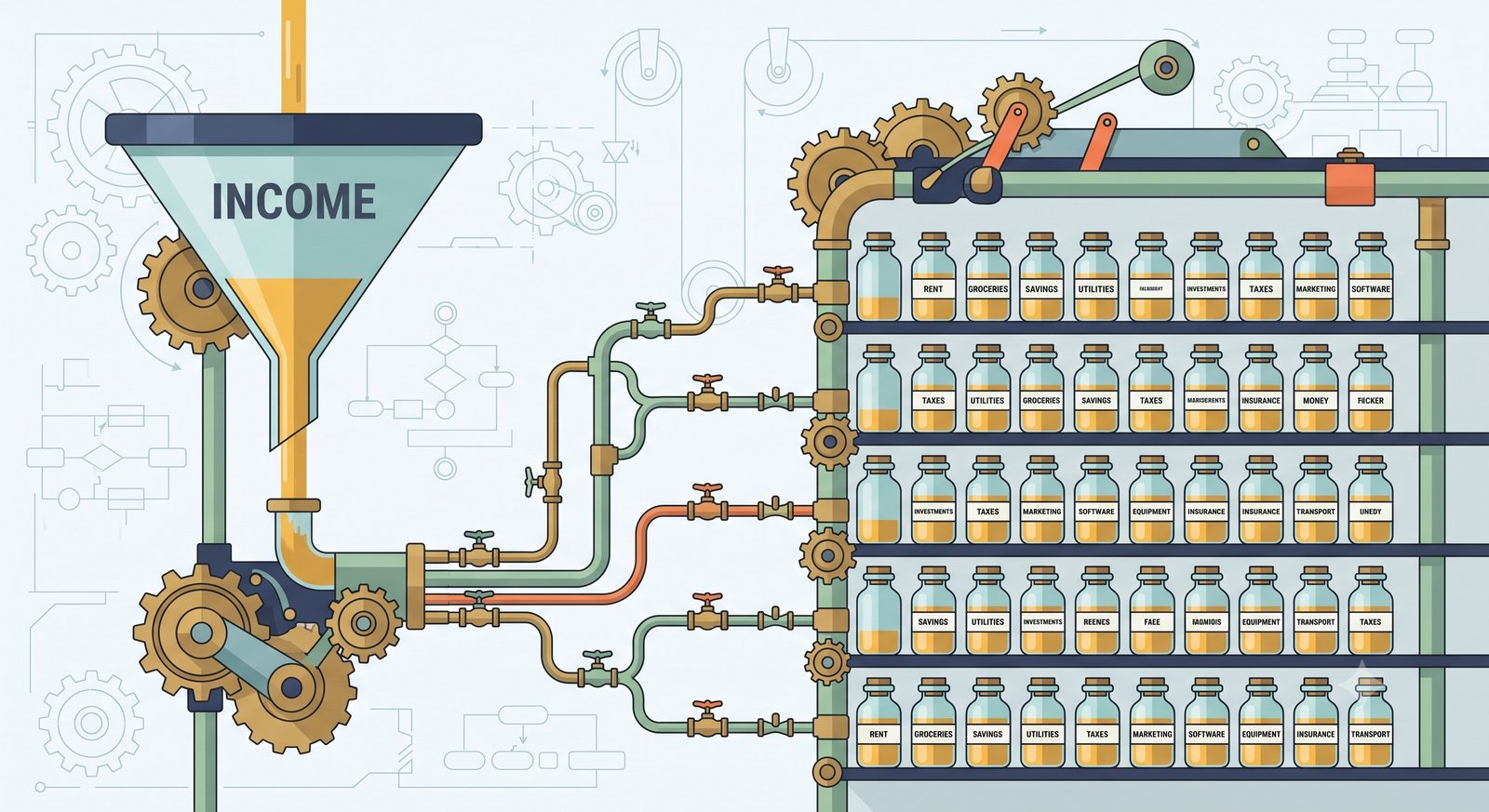
Zero-Based Budgeting (ZBB) represents the most granular, highly engaged, and mathematically precise form of capital allocation available to households. Originating in the 1970s through the work of Peter Pyhrr at Texas Instruments for corporate cost control, ZBB requires the financial planner to justify and assign a specific, operational purpose to every single unit of currency earned before the new month begins.
Unlike proportional methods that rely on rough, generalized percentages, the fundamental mathematical equation of ZBB dictates strict equilibrium:
Total Monthly Income − (Total Planned Expenses + Total Savings + Total Investments + Debt Servicing) = $0.00
In a ZBB framework, "zero" does not imply that an individual has exhausted their net worth or emptied their bank accounts into oblivion; rather, it indicates that exactly zero dollars have been left unassigned, idle, or unaccounted for. If an individual earns $6,500 in a month, and their standard fixed and variable expenses total $4,800, the remaining $1,700 cannot simply sit amorphously in a primary checking account. Idle capital in a checking account is psychologically vulnerable to impulsive spending. Therefore, that $1,700 must be explicitly assigned a "job"—whether that job is funding a Roth IRA, accelerating a mortgage principal payoff, or being partitioned into a highly specific sinking fund for impending property taxes.
4. The Envelope System (Cash-Friction Budgeting)
The Envelope System is a tactical execution protocol often utilized in conjunction with Zero-Based Budgeting to curb severe overspending. It fundamentally relies on the behavioral economic principle of "cognitive spending friction" and loss aversion. Modern digital finance—credit cards, contactless mobile payments, and auto-renewing subscriptions—has systematically removed the psychological "pain of paying." When an individual swipes a credit card, the brain fails to register the immediate depletion of resources.
In its traditional, analog form, individuals cash out their variable, discretionary income at the beginning of the month. They then physically separate the fiat banknotes into paper envelopes manually labeled for highly volatile categories, such as "Groceries," "Entertainment," "Apparel," and "Dining Out." Fixed obligations (rent, digital utilities) remain in the checking account for automated clearing.
The defining, unbreakable rule of the Envelope System is strict compartmentalization and absolute scarcity. If the cash in the "Dining Out" envelope is entirely depleted by the 18th of the month, the individual ceases all restaurant consumption for the remainder of the period. They are strictly prohibited from cannibalizing funds from the "Groceries" envelope or circumventing the system by utilizing a credit card. By reintroducing the physical transfer of currency, the brain re-engages with the reality of finite capital, dramatically curbing impulsive consumer behavior.
5. Reverse Budgeting (Pay Yourself First)
Reverse budgeting operates on an entirely different philosophical and operational paradigm compared to ZBB or the Envelope System. Traditional budgeting methods focus intensely on tracking outflows, logging receipts, and actively restricting expenses to hopefully generate a capital surplus by the end of the month. The Reverse Budgeting (or "Pay Yourself First") method flips this equation completely. It treats long-term savings, investments, and wealth accumulation as the highest-priority, non-negotiable expenses that must be processed instantaneously upon the receipt of revenue.
In execution, an individual calculates their desired long-term Gross Savings Rate (GSR). If a household determines they require a 25% GSR to meet their retirement timeline, the execution relies entirely on technological automation. On payday, before the individual even views their checking account balance, banking APIs and employer payroll splits automatically route 25% of the gross capital directly into 401(k)s, mutual fund Systematic Investment Plans (SIPs), and high-yield emergency reserves.
Only after these wealth-building transfers are legally cleared does the individual concern themselves with the remaining 75%. Because the wealth-building capital has already been sequestered, the individual is free to spend the remainder of the checking account balance on fixed needs and discretionary wants with zero guilt and zero micro-tracking. This method excels for naturally frugal individuals who suffer from "tracking fatigue" but possess the discipline to automate their investments.
6. Sinking Funds and Amortized Liabilities
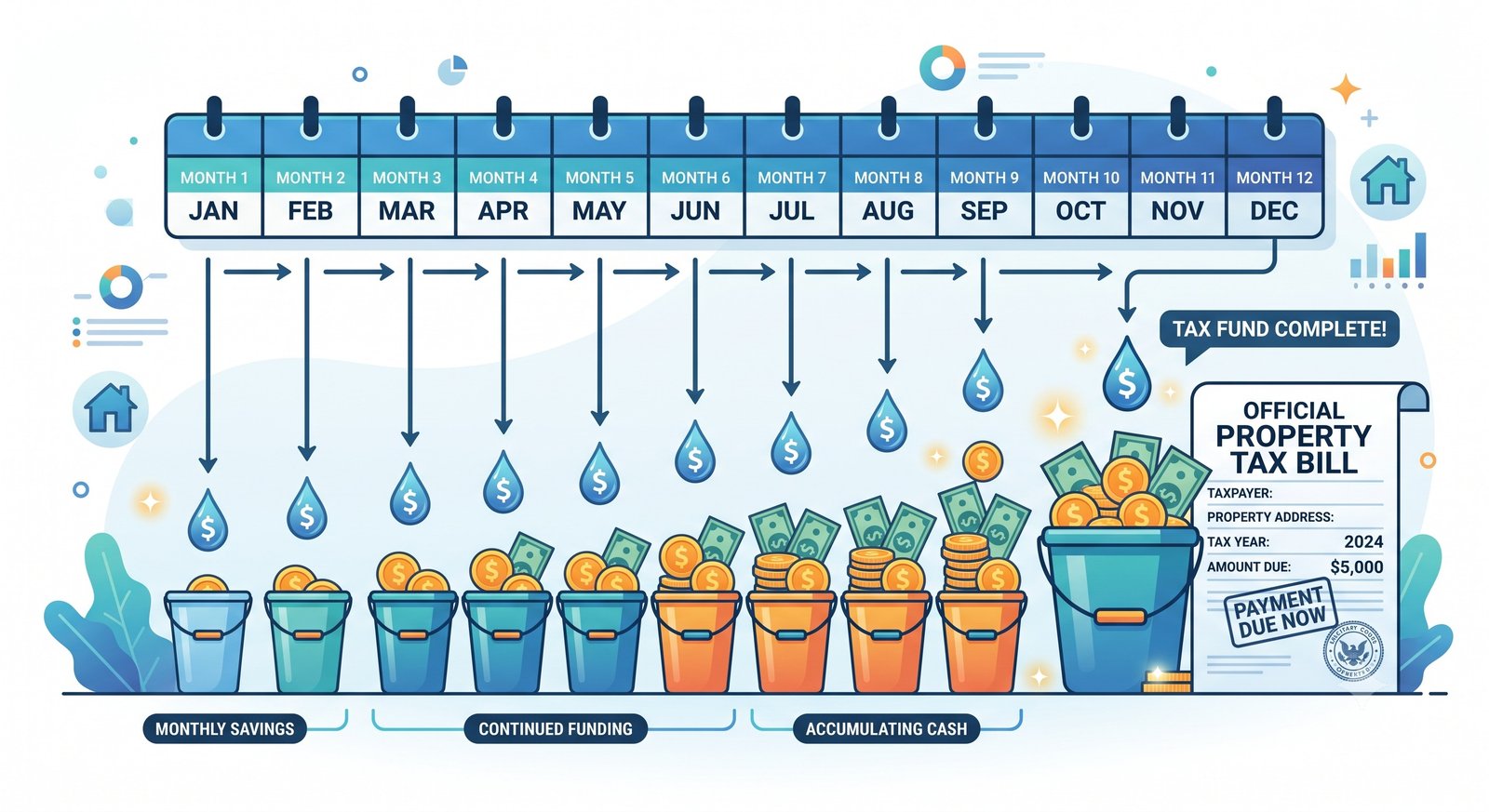
Regardless of the primary framework utilized (50/30/20, ZBB, or Reverse), virtually all successful financial plans must incorporate the concept of Sinking Funds. Standard budgets frequently collapse because they only account for recurring monthly expenses (rent, internet, groceries), leaving the household highly vulnerable to inevitable, highly predictable, but irregular annual costs.
A sinking fund is a strategic mechanism used to amortize a large future liability into small, manageable monthly capital reservations. Unlike an emergency fund—which is reserved for unpredictable, catastrophic shocks like job loss or sudden hospitalization—a sinking fund is explicitly allocated for known future outflows: annual property taxes, bi-annual auto insurance premiums, holiday gifting, or predictable vehicle maintenance.
The formula for determining a Sinking Fund Monthly Allocation (SFMA) is:
SFMA = (Total Anticipated Liability Cost) / (Months Remaining Until Due Date)
If an individual knows a $1,200 home insurance premium is due every December, and it is currently January, they must allocate exactly $109.09 per month ($1,200 / 11 months) into a dedicated, segregated savings sub-account. When December arrives, the capital is already fully accrued, preventing a sudden cash flow crisis that would otherwise trigger credit card debt.
7. Structural Comparison of Budgeting Methodologies
To determine the optimal capital allocation strategy, investors must weigh the structural trade-offs of each system. The following matrix evaluates the core methodologies across friction levels, ideal user profiles, and operational complexity:
| Budgeting Methodology | Operational Complexity | Primary Mechanism | Ideal User Demographic |
|---|---|---|---|
| 50/30/20 Rule | Low | Macro-level percentage caps restricting lifestyle creep. | Salaried professionals seeking general guardrails without granular receipt-tracking fatigue. |
| Zero-Based Budgeting (ZBB) | High | Micro-assignment of every dollar to absolute zero. | Analytical individuals, households executing aggressive debt-payoff, or variable-income freelancers. |
| Envelope System | Moderate | Physical cash scarcity and cognitive spending friction. | Chronic over-spenders highly susceptible to credit card impulsivity and digital payment detachment. |
| Reverse Budgeting | Very Low (Once Automated) | Automated extraction of wealth-building capital prior to consumption. | Disciplined high-savers focused on aggressive FIRE (Financial Independence, Retire Early) goals. |
8. Empirical Case Studies in Capital Allocation
To fully comprehend how these frameworks neutralize financial volatility and generate solvency, we must examine their application in specific, real-world macroeconomic scenarios.
Case Study 1: Neutralizing Lifestyle Creep with the 50/30/20 Rule
Scenario: Elena (34) recently received a major corporate promotion, elevating her Net After-Tax Income (NATI) to $8,000 per month. Historically, Elena suffered from chronic lifestyle creep; whenever her income increased, she immediately upgraded her apartment, leased a luxury vehicle, and expanded her dining budget, resulting in a net-worth stagnation near zero despite earning a top-tier salary.
Execution: To enforce structural discipline, Elena applies the 50/30/20 framework. She strictly caps her "Needs" at $4,000 (50%). When she attempts to lease a new $800/month vehicle, the math reveals her total needs (Rent: $2,800 + Utilities: $400 + Insurance/Groceries: $500) already equal $3,700. The vehicle lease would push her needs to $4,500 (56% of NATI), breaking the rule. She declines the lease. She allocates $2,400 (30%) strictly for travel, restaurants, and entertainment. Finally, she automates the extraction of $1,600 (20%) into a low-cost S&P 500 index fund immediately on payday. Result: By respecting the proportional caps, Elena enjoys a high-quality lifestyle ($2,400 discretionary) while seamlessly accumulating $19,200 in invested capital annually, completely neutralizing her historical lifestyle creep.
Case Study 2: Taming Variable Income with ZBB and a "Hill-and-Valley" Buffer
Scenario: Julian (29) is a freelance graphic designer. His income is highly erratic; he may earn $9,000 in October, $2,000 in November, and $5,000 in December. Traditional budgeting fails him because he cannot predict his top-line revenue, leading to severe anxiety and reliance on credit cards during low-income "valley" months.
Execution: Julian deploys a specialized Zero-Based Budgeting variant combined with an "Income Smoothing Buffer." He calculates his absolute minimum monthly survival outgo (rent, food, base utilities) at $3,500. He establishes a dedicated buffer account holding exactly $7,000 (two months of baseline expenses). In October, when he earns $9,000, he executes ZBB: he routes $3,500 to his checking account for current month expenses, assigns $2,000 to his self-employment tax sinking fund, assigns $1,500 to his Vanguard IRA, and routes the remaining $2,000 to "top off" his buffer account. In November, when he earns only $2,000, he mathematically falls short. He draws the missing $1,500 directly from his buffer account to meet his $3,500 requirement, bringing his balance to exactly zero. Result: Julian converts his chaotic, variable revenue stream into a perfectly predictable, stable $3,500 monthly salary, completely eliminating his reliance on high-interest revolving credit.
9. Actionable Strategy Guide: Implementing a Hybrid Budget Architecture
For individuals ready to assert total control over their cash flow, the most effective modern framework is often a hybrid approach: combining the macro-guidance of the 50/30/20 rule with the automation of Reverse Budgeting and the precision of Sinking Funds. Follow this step-by-step implementation protocol:
- Step 1: Execute a Forensic Expense Audit. Do not guess your expenses. Export the last 90 days of bank and credit card statements into a spreadsheet. Categorize every transaction into three columns: Fixed Survival (Rent, Utilities, Debt), Variable Necessity (Groceries, Fuel), and Pure Discretionary (Dining, Subscriptions). Calculate the exact monthly averages to establish your true financial baseline.
- Step 2: Define the Investment Target (Reverse Budgeting). Before adjusting your lifestyle, determine your required wealth-building target. A minimum of 20% of net income is the mathematical standard for long-term solvency. Set up an automated clearing house (ACH) transfer to pull this 20% directly into your brokerage or retirement accounts 24 hours after your paycheck clears.
- Step 3: Establish the Sinking Fund Matrix. Identify all non-monthly recurring expenses (property taxes, insurance, holiday shopping, auto maintenance). Divide the annual cost of each by 12. Open a separate, high-yield savings sub-account and set an automatic monthly transfer for this exact aggregate amount.
- Step 4: Constrain the Baseline. Evaluate your Fixed Survival and Variable Necessity columns from Step 1. Ensure these do not exceed 50% of your remaining net income. If they do, you are structurally over-leveraged and must execute major structural changes (e.g., refinancing a vehicle, securing a roommate, or relocating).
- Step 5: Isolate the Discretionary Allowance. The remaining capital (up to 30%) represents your guilt-free consumption allowance. To prevent overdrafts and enforce behavioral boundaries, consider moving this specific amount to a separate debit card or utilizing the physical Envelope System strictly for this discretionary tier.
10. Frequently Asked Questions (FAQ)
Q: Which budgeting method is optimal for rapidly paying off massive credit card debt?
Zero-Based Budgeting (ZBB) is unequivocally the best method for aggressive debt eradication. Because ZBB forces you to scrutinize and assign every single dollar, it immediately highlights inefficiencies and leaked capital in your cash flow. By assigning all surplus dollars directly to the "Debt Payoff" category before the month begins, you maximize the velocity of your principal reduction, minimizing the compounding interest generated by the credit card issuer.
Q: Does the 50/30/20 rule apply to gross income or net income?
The 50/30/20 rule is strictly calculated using Net After-Tax Income (NATI)—the actual capital deposited into your checking account after federal, state, and local taxes have been withheld. However, there is a critical exception regarding pre-tax deductions: if your employer automatically deducts 401(k), EPF, or health insurance premiums directly from your gross pay, you must add those specific amounts back into your calculation. Health insurance counts toward the 50% "Needs" bucket, and retirement contributions count toward the 20% "Savings" bucket.
Q: I work on 100% commission. How can I budget when I don't know what I will make next month?
Commission-based professionals must utilize the "Last Month’s Income" (or Buffer) strategy combined with Zero-Based Budgeting. You must first stockpile an operating buffer equal to one month of your absolute bare-bones survival expenses. Throughout the current month, deposit all commissions into a holding account. On the 1st of the next month, you transfer exactly what you earned last month into your operating checking account and execute a Zero-Based Budget on that known, fixed amount. You are always living on money that is already at least 30 days old, completely neutralizing income volatility.
Q: Why do financial planners advise against using credit cards with the Envelope System?
The Envelope System relies entirely on the psychological friction of parting with physical, finite legal tender. Credit cards abstract the purchasing process, triggering cognitive detachment and encouraging impulsive overspending. While credit cards offer points and cashback rewards, empirical behavioral studies routinely demonstrate that consumers spend 12% to 18% more on average when swiping plastic compared to handing over physical cash. For individuals struggling with self-discipline, the psychological boundary provided by an empty physical envelope mathematically outweighs a 2% cashback incentive.
Q: Are minimum debt payments considered a 'Need' or 'Savings/Debt Reduction' in the 50/30/20 rule?
This requires precise categorization. Contractual minimum payments on existing debt (e.g., the required $250 monthly payment on a student loan or a credit card minimum) are legally binding obligations required to prevent credit default and preserve basic financial functioning. Therefore, minimum payments must be categorized under the 50% Needs bucket. However, any accelerated or additional principal payments designed to eradicate the debt faster are actively expanding your net worth, and thus are categorized under the 20% Savings/Debt Reduction bucket.
See also
- Loading related topics...