Credit Card Best Practices
The Definitive Guide to Utilization Mechanics, Reward Arbitrage, and Debt Eradication
Credit cards are unequivocally the most powerful, complex, and deeply polarizing financial instruments available in modern retail banking. When utilized correctly, backed by rigorous mathematical discipline and strategic foresight, they function as an elite financial tool. They offer robust statutory fraud protection, generate substantial tax-free cash rewards, provide complimentary global travel insurance, and act as the primary mechanism for systematically building a top-tier credit profile. However, when managed poorly—often due to a lack of fundamental financial literacy regarding compounding interest—they instantly transform into predatory traps of high-interest revolving debt, capable of destroying long-term wealth accumulation and devastating a consumer's credit score for a decade.
The defining structural characteristic of a credit card is that it is an unsecured, revolving line of credit. Because the debt is not secured by a tangible physical asset that the bank can repossess (unlike a residential home mortgage or a collateralized auto loan), the issuing institutions take on significantly higher statistical default risk. To mathematically offset this massive systemic risk, banks charge exorbitant Annual Percentage Rates (APRs), frequently exceeding 20% to 25%. Navigating this highly engineered landscape requires absolute, unyielding financial discipline and a deep understanding of the mathematical mechanics behind statement billing cycles, interest grace periods, and compounding debt. Adhering strictly to fiduciary-grade credit card best practices permanently separates those who strategically exploit the banking system for personal profit from those who fall victim to it.
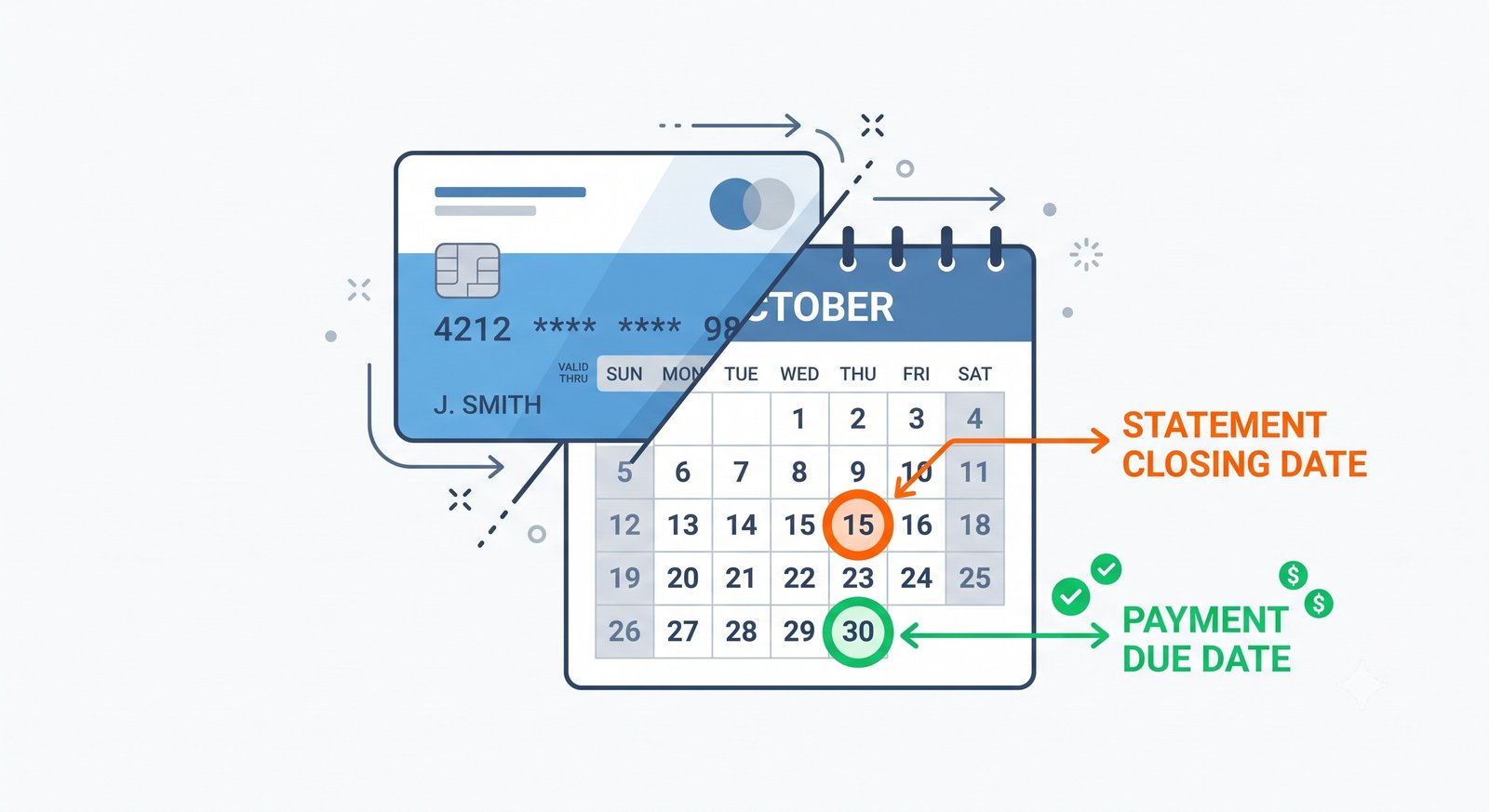
1. The Mechanics of the Grace Period and Billing Cycles
The single most important functional concept for a credit card user to master is the Interest Grace Period. A standard credit card billing cycle is typically 28 to 31 days long. At the exact termination of this cycle—a date formally known as the Statement Closing Date—the issuing bank tallies all settled purchases, credits, and fees, and generates an official statement. The consumer is then legally granted a grace period—usually mandated by law to be a minimum of 21 to 25 days—between that Statement Closing Date and the actual Payment Due Date.
If the consumer pays the entire Statement Balance in full before the end of this grace period, they are charged exactly $0.00 in interest on their purchases. In mathematical effect, they have utilized the bank's capital for up to 55 days entirely for free, capturing the time value of money. However, if the consumer fails to pay the statement balance in full—even leaving a negligible $5.00 unpaid—the grace period is instantly and punitively revoked. At that exact moment, the bank begins charging interest retroactively based on the Average Daily Balance method, and exorbitant interest will begin accruing daily on both the unpaid balance and any new purchases moving forward until the entire account is brought back to a permanent zero balance.
2. Strategic Payment Habits: The Minimum Payment Trap
Credit card issuers heavily advertise and legally require a "minimum payment" each month to keep the account in good standing and avoid late fees. This minimum is usually calculated algorithmically as 1% to 3% of the total principal balance, plus any newly accrued interest charges. The minimum payment is not a consumer benefit; it is a highly engineered mathematical trap designed to maximize bank profits by stretching the debt repayment out over decades.
Paying only the minimum ensures that the underlying principal balance barely shrinks, while the compounding daily interest causes the total cost of the debt to skyrocket exponentially. The golden rule of credit card usage is uncompromising: never charge more to the card than you currently have sitting in liquid, accessible cash in your primary checking account, and always configure automated clearing house (ACH) payments to pay the statement balance in full every single month. By treating a credit card exactly like a debit card with a 30-day delay, a consumer completely immunizes themselves against the devastating, wealth-destroying impact of high APRs.
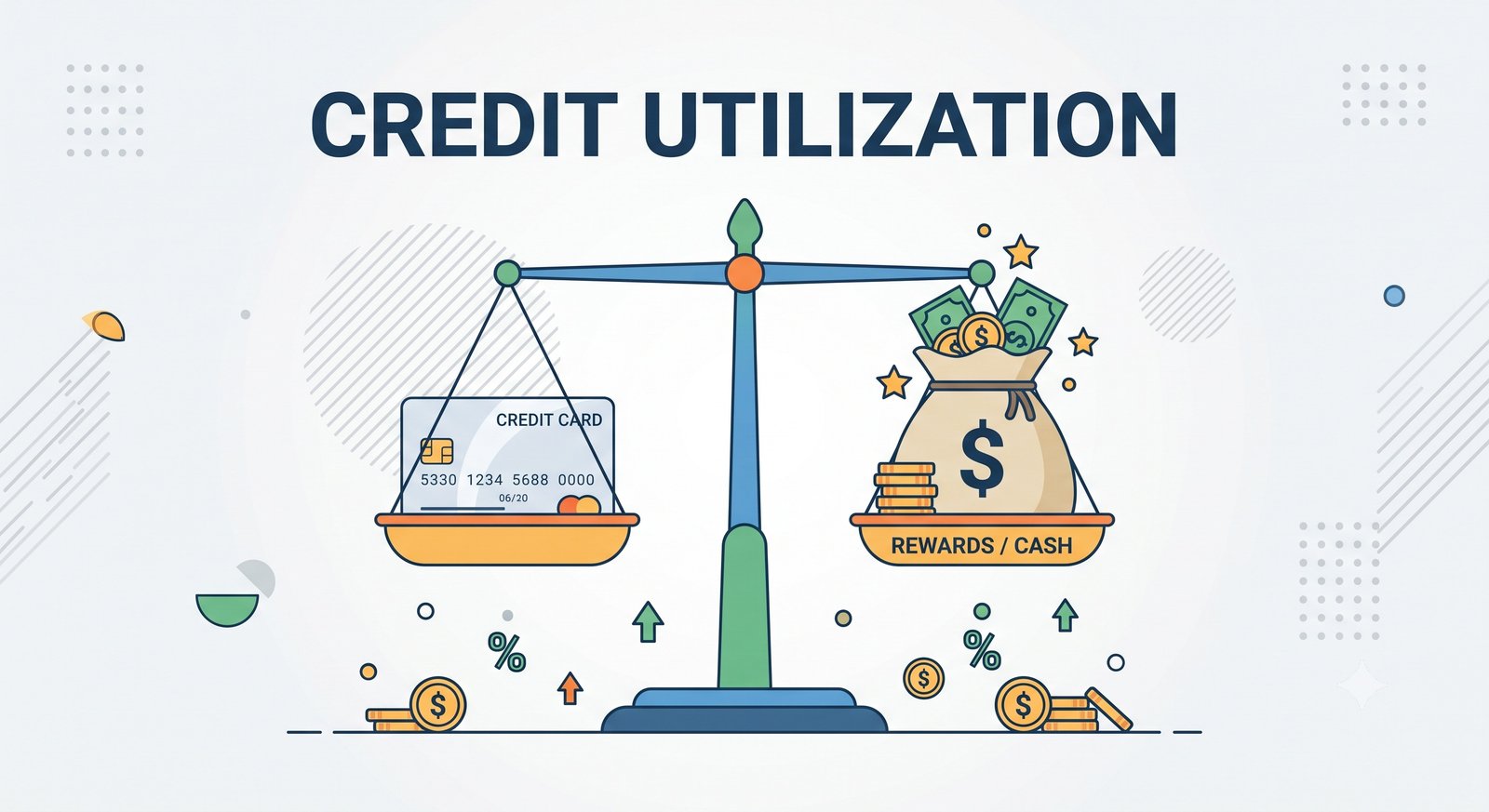
3. Optimizing Credit Utilization for FICO Dominance
As firmly established in credit scoring algorithms (specifically FICO 8), the Credit Utilization Ratio—the mathematical percentage of available credit actively being used—dictates a massive 30% of a consumer's total credit score. Even if a highly disciplined user pays their balance in full every single month to avoid interest, a high reported balance can temporarily tank their credit score by 50 to 80 points. This occurs due to a critical systemic timing flaw: banks typically report the balance to the national credit bureaus (Equifax, Experian, TransUnion) on the Statement Closing Date—which occurs weeks before the user actually makes their required payment.
Credit Utilization Formula:
Utilization % = (Total Reported Balances / Total Available Credit Limits) × 100
To completely neutralize this algorithm and force the highest possible score, consumers must implement the following tactics:
- The AZEO Pre-Payment Strategy: Advanced users do not wait for the statement to generate. They pay down their active balance two to three days before the Statement Closing Date. When the statement finally generates, it reports a near-zero balance to the bureaus, ensuring a flawless utilization ratio (ideally between 1% and 9%). This strategy is known as "All Zero Except One" (AZEO).
- Expanding the Denominator: Periodically requesting a Credit Limit Increase (CLI) from the issuer mathematically forces the utilization ratio downward, assuming the consumer's spending habits remain strictly constant. A $2,000 balance on a $5,000 limit is a dangerous 40% utilization; that exact same $2,000 balance on a $20,000 limit is a highly favorable 10% utilization.
4. Maximizing Rewards and Cashback Arbitrage
Once a consumer masters the discipline of paying in full and completely avoiding interest, credit cards structurally transition from toxic debt instruments into powerful profit generators. Credit card companies offer highly lucrative rewards—cashback, airline miles, and premium hotel points—funded directly by the transaction fees (interchange fees) charged to merchants at the point of sale, as well as the exorbitant interest harvested from less-disciplined consumers caught in the minimum payment trap.
Consumers can perform a highly effective form of financial arbitrage by routing all natural, non-negotiable necessary expenses (groceries, utilities, fuel, insurance) through a categorized rewards card. However, this strategy requires hyper-vigilance against the psychological trap of induced overspending. Behavioral economic studies have consistently proven that consumers spend up to 15% to 20% more when utilizing plastic compared to physical fiat cash, due to the "frictionless" and abstract nature of the transaction. Earning 2% cashback is a catastrophic mathematical failure if the user subconsciously spent 20% more on a product they didn't actually need just to trigger the dopamine hit of earning the reward.
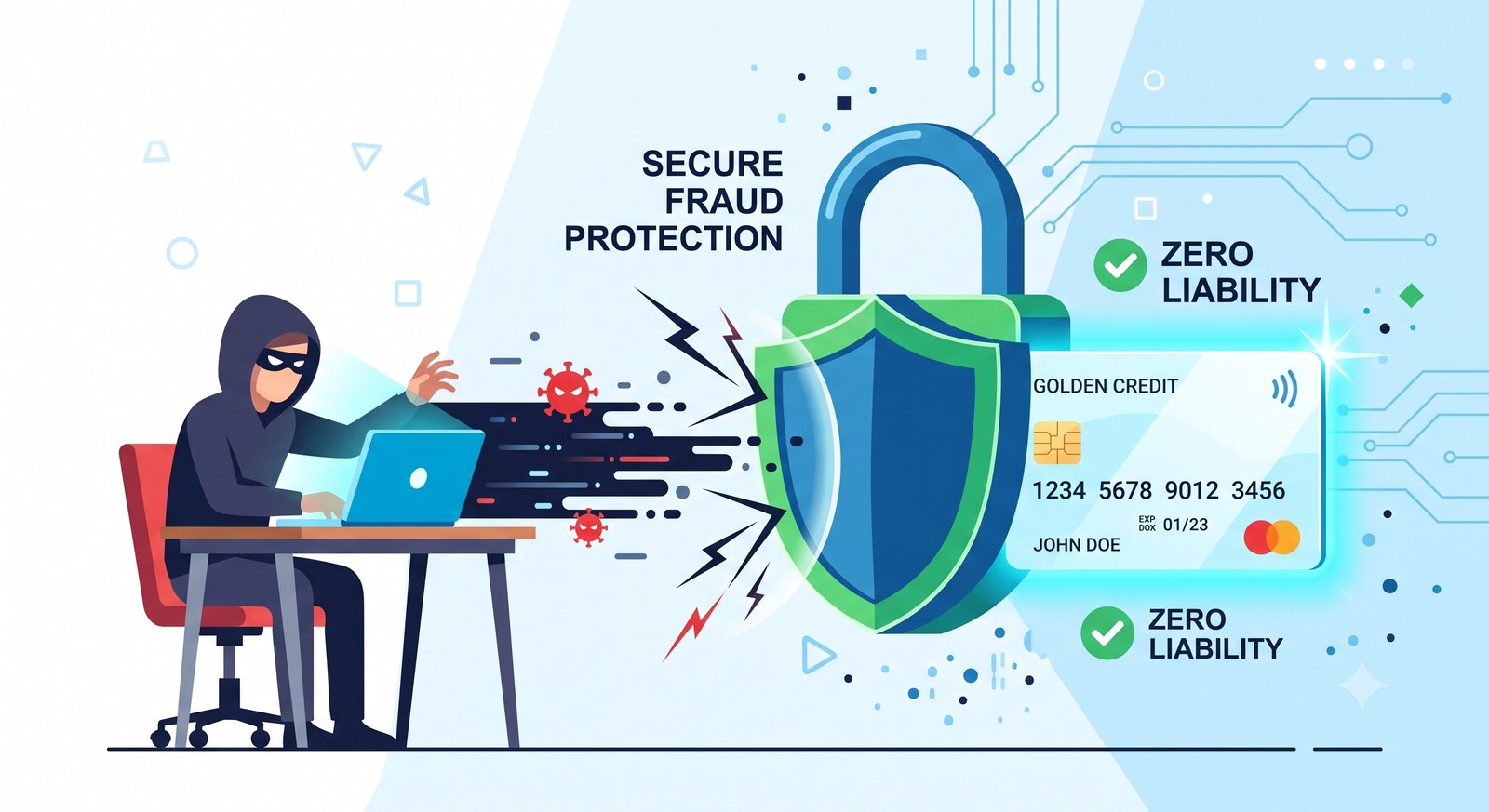
5. Security, Fraud Prevention, and Zero Liability
From a purely cybersecurity and operational standpoint, a credit card is vastly superior to a traditional debit card. When a debit card is compromised by a hacker or a physical skimmer, the malicious actor directly and immediately drains the consumer's personal checking account. This triggers an instant cash flow crisis, potentially causing bounced mortgage checks, missed rent, and cascading overdraft fees while the bank takes weeks to investigate. Conversely, when a credit card is compromised, the hacker is explicitly stealing the bank's money, not the consumer's liquid cash.
Under the strict regulations of the Fair Credit Billing Act (FCBA) in the United States, and similar statutory protections globally, consumers are legally protected from fraudulent credit card charges. Virtually all major issuers (Visa, Mastercard, Amex) voluntarily go a step further, offering absolute Zero Liability Protection, ensuring the consumer pays exactly $0.00 for unauthorized transactions. Furthermore, credit cards grant the consumer the immense legal power of the "Chargeback"—the ability to unilaterally dispute a charge and reverse funds if a merchant engages in fraud, fails to deliver a promised product, or goes out of business.
6. Empirical Case Studies in Credit Strategy
Case Study 1: The Devastation of Daily Compounding (The Debt Trap)
Scenario: Julian (28) carries an $8,000 balance on a premium rewards credit card following an international vacation. The issuer charges an APR of 24.5%, which is calculated and compounded daily. To preserve his monthly cash flow, Julian decides he will only pay the required "Minimum Payment" each month, which the bank calculates as 2.5% of the outstanding balance, or roughly $200.
The Mechanics of Failure: In month one, the 24.5% daily compounded APR generates approximately $163 in new interest. When Julian pays his $200 minimum payment, $163 goes entirely to the bank as pure profit, and an abysmal $37 is applied to reduce the $8,000 principal. In month two, interest compounds on $7,963. If Julian continues to only pay the minimum, it will take him roughly 88 months (over 7 years) to eradicate the debt. More devastatingly, over that horizon, Julian will pay the bank over $9,500 in pure interest.
Result: Julian effectively paid $17,500 for an $8,000 vacation. The credit card issuer weaponized the daily compounding frequency, mathematically ensuring that the asset generated an exponential return for the bank's shareholders while financially paralyzing the consumer.
Case Study 2: The Rewards Arbitrage System (The Optimal User)
Scenario: Maya (34) understands credit mechanics. She has a flat 2% cashback credit card. She routes every single organic, non-negotiable household expense through this card—groceries, gas, insurance, and utilities—totaling $3,000 per month. She treats the card strictly as a delayed debit card.
The Execution: Maya sets her checking account to auto-pay the full statement balance three days before the due date. Because she pays the statement balance in full, her grace period remains intact, and she pays exactly $0 in interest for the entire year. However, the bank pays her 2% on her $3,000 monthly spend.
Result: At the end of the year, Maya has generated $720 in tax-free cash simply by changing the medium of exchange she used to pay for her existing life. By refusing to carry a balance, the 24% APR on the card is mathematically irrelevant to her.
7. Actionable Strategy Guide: The Blueprint for Mastery
The optimal blueprint for credit card mastery requires cold, mechanical execution of basic rules. Implement this system to transform your credit from a liability into a highly leveraged asset:
- Step 1: The Liquidity Mandate. Never swipe a credit card for an amount you do not currently possess in liquid cash in your primary checking account. If you cannot afford it with a debit card today, you cannot afford it with a credit card today.
- Step 2: Automate the Full Balance. Log into your issuer's portal and configure the Auto-Pay setting specifically to "Pay Statement Balance in Full." Do not select "Minimum Payment" or "Account Balance." This guarantees the preservation of your grace period.
- Step 3: Execute the AZEO Strategy. To maximize your FICO score for an upcoming loan application, pay all your credit cards down to $0 before the Statement Closing Date, leaving only a tiny $15 balance on exactly one card to report to the bureaus. This optimizes the 30% utilization metric perfectly.
- Step 4: Audit Annual Fees. If you hold a premium travel card charging a $500 annual fee, you must aggressively calculate your ROI. Ensure the value of the points earned, airport lounge access, and travel credits mathematically exceeds the $500 fee. If it does not, immediately downgrade the card to a "no annual fee" variant within the same bank to preserve the account's age.
8. Frequently Asked Questions (FAQ)
Q: Does carrying a small balance from month to month help build my credit score faster?
Absolutely not. This is the most dangerous, pervasive myth in personal finance. The credit bureaus only care about your reported utilization percentage and whether you made an on-time payment. They do not reward you for paying interest to the bank. Carrying a balance and paying a 25% APR is simply bleeding your wealth. Pay the statement balance in full every single month.
Q: Should I cancel my oldest credit card because I never use it anymore?
Generally, no. Your oldest credit card is the primary anchor for your "Average Age of Accounts" (AAoA), which comprises 15% of your FICO score. If you cancel it, it will eventually fall off your report, dropping your AAoA and reducing your total available credit limit (which spikes your utilization ratio). Instead of closing it, ensure it has no annual fee, put a tiny recurring subscription on it (like a $5 Patreon charge), and set it to autopay to keep it active.
Q: What is a 0% APR Balance Transfer, and is it a trap?
A balance transfer allows you to move high-interest debt from one card to a new card offering a 0% introductory rate (usually for 12 to 18 months), allowing 100% of your payments to attack the principal. It is an incredible tool, but it becomes a trap if you do not alter the spending behavior that caused the debt. Furthermore, most balance transfers charge an upfront 3% to 5% transfer fee. If you fail to pay off the entire balance before the 0% promo expires, the rate instantly skyrockets back to 25%.
Q: If I pay off my credit card the day after the due date, will my score drop?
Paying one day late will trigger a punitive late fee from the bank (often $35+), and you will immediately lose your interest grace period, meaning you will owe compounding interest on the balance. However, it will not drop your credit score. By law, banks cannot report a late payment to the credit bureaus until the payment is a full 30 days past the due date. While your wallet suffers the fee, your FICO score remains perfectly intact if you pay it within that 30-day window.
See also
- Loading related topics...