Good Debt vs Bad Debt
The Definitive Guide to Financial Leverage, Capital Arbitrage, and Wealth Optimization
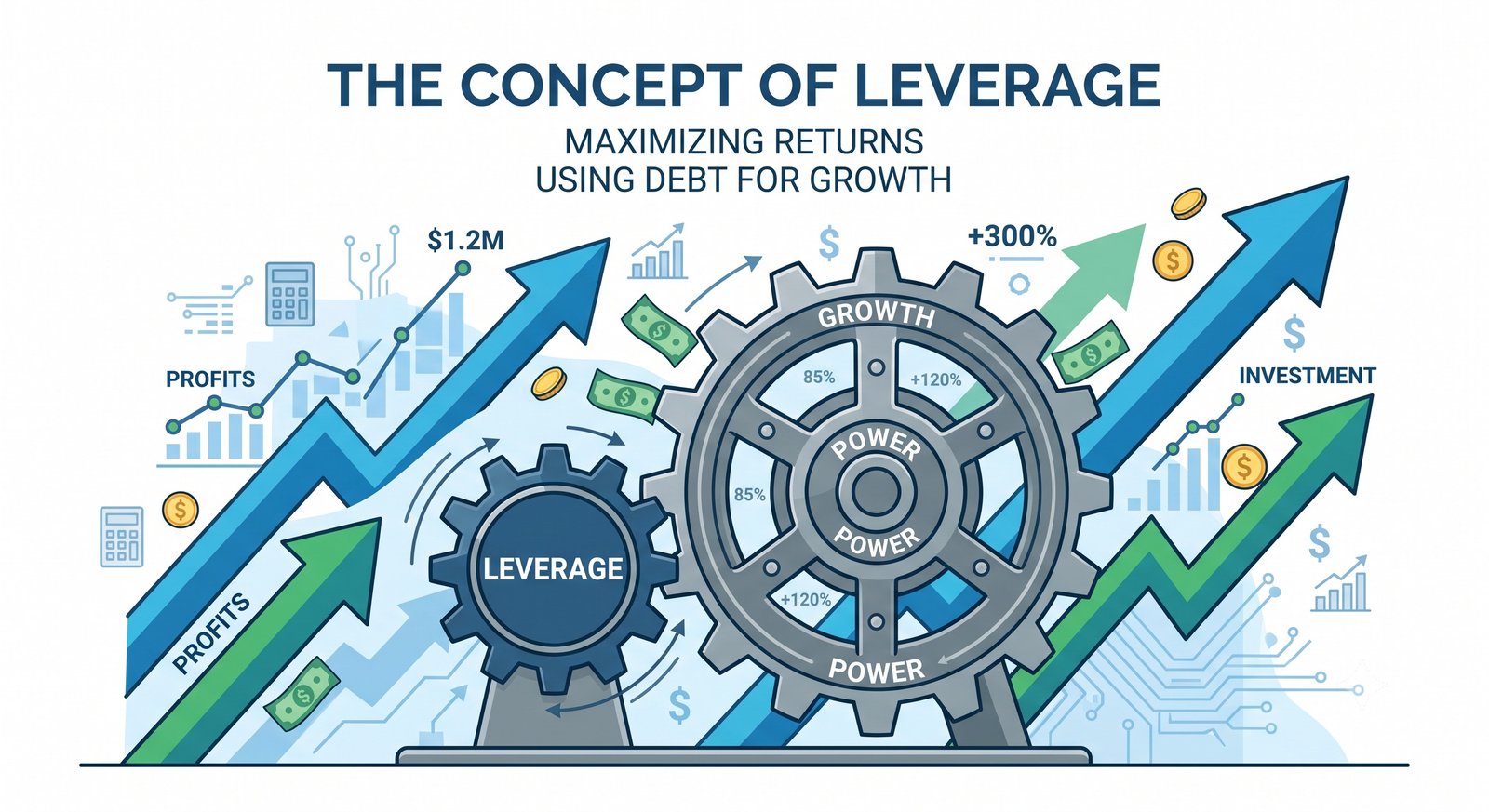
In colloquial personal finance discussions, debt is frequently villainized as an intrinsic evil that must be avoided at all costs. However, in the highly analytical realms of professional wealth management and corporate finance, debt is simply viewed as a tool—specifically, the mathematical tool of financial leverage. Like any powerful operational tool, it possesses no inherent moral alignment; its economic value is entirely dependent on how mathematically sound its application is relative to prevailing market conditions.
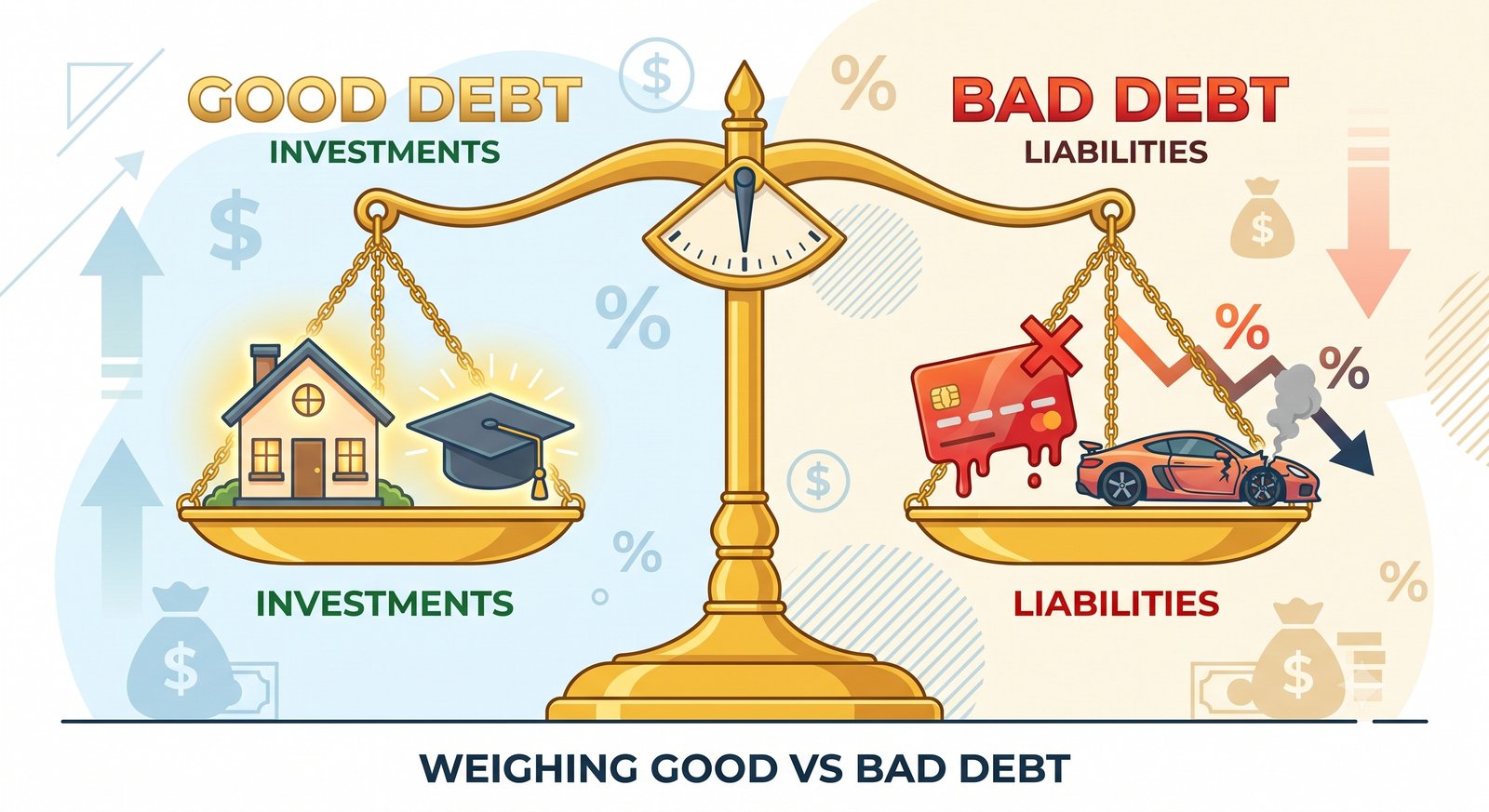
The fundamental distinction between "good debt" and "bad debt" is rooted entirely in the core economic concepts of Return on Investment (ROI) and asset depreciation. Good debt acts as an aggressive engine for wealth creation, allowing individuals to acquire appreciating assets or income-generating vehicles that mathematically outpace the cost of the borrowed capital. Conversely, bad debt acts as an anchor of wealth destruction, violently siphoning future cash flow to finance the immediate consumption of depreciating liabilities at exorbitant, compounding interest rates. Mastering this critical dichotomy is a mandatory prerequisite for achieving long-term financial independence and structural solvency.
1. The Mathematics of Leverage: Calculating the Arbitrage Spread
To divorce emotion from debt management, financial planners rely on the calculation of the Net Arbitrage Spread. Arbitrage, in this context, refers to the practice of taking advantage of a price or yield difference between two distinct financial markets or vehicles. When a consumer or corporation utilizes debt, they are purchasing capital at a specific cost (the Interest Rate) to deploy it into an asset that generates a specific yield (the Return on Investment). If the yield exceeds the cost, positive arbitrage is achieved.
Net Arbitrage Spread Formula:
Spread = (Asset Appreciation Rate + Income Yield) - (Effective Interest Rate of Debt)
If the resulting "Spread" is a positive integer, the borrowed capital qualifies mathematically as "Good Debt." The debt is physically pulling the investor's net worth upward. If the resulting Spread is a negative integer—which occurs universally when financing consumer goods that drop in value while accruing interest—the borrowed capital is classified as "Bad Debt," rapidly accelerating the destruction of the borrower's balance sheet.
2. Defining "Good Debt": Leverage for Asset Accumulation
Good debt is structurally characterized by borrowing fiat money at a relatively low, manageable interest rate to heavily invest in an asset that is mathematically projected to increase in value or exponentially increase your future earning capacity. The core economic principle at play here is positive leverage: as long as the after-tax return on the asset purchased significantly exceeds the after-tax cost of the borrowed capital, the debt is actively making the borrower wealthier in real terms.
- Real Estate Mortgages: Mortgages are universally heralded by economists and planners as the premier form of good debt. Because physical real estate generally appreciates over long macroeconomic time horizons due to land scarcity and population growth, a mortgage allows an individual to control a massive, appreciating asset with a relatively small down payment—the ultimate application of leverage. Furthermore, long-term fixed-rate mortgages act as a phenomenal, structural hedge against inflation, allowing the borrower to repay the loan decades later with fiat currency that has been severely devalued by central bank inflation.
- Business and Commercial Loans: For ambitious entrepreneurs and corporate entities, debt is the fundamental fuel of operational expansion. Taking out a commercial loan to purchase heavy industrial machinery, expand warehouse operations, or hire a nationwide sales team is fundamentally good debt if the Return on Invested Capital (ROIC) generated by that specific expansion aggressively outpaces the interest rate of the loan. If a $100,000 loan at 7% allows a business to generate $30,000 in new annual net profit, the leverage is highly accretive.
3. Human Capital: The Extreme Nuance of Student Loans
Student loans represent a fascinating, highly complex intersection of good and bad debt, heavily dependent on the rigid mathematical reality of the borrower's chosen career path. In classical economic theory, investing in higher education is classified as an investment in "human capital"—purchasing specialized skills, network access, and institutional credentials that will drastically and permanently increase the borrower's lifetime earning potential.
However, the "good debt" classification of a student loan is entirely, unequivocally contingent on the Return on Investment (ROI) of the specific academic degree acquired. Borrowing $50,000 for an advanced medical, computer science, or engineering degree with a near-guaranteed median starting salary of $90,000 is an exceptional, wealth-generating use of leverage. The increased cash flow easily absorbs the monthly amortization of the debt.
Conversely, borrowing an astronomical $150,000 for a degree in an oversaturated or low-demand field with a median starting salary of $35,000 mathematically morphs this well-intentioned investment into catastrophic bad debt. In this scenario, the marginally increased earning potential fails completely to justify the amortized cost of the capital, trapping the borrower in a multi-decade cycle of negative cash flow and structural insolvency.
4. Defining "Bad Debt": The Architecture of Wealth Destruction
Bad debt occurs systematically when an individual borrows money to purchase a depreciating asset or to fund immediate, discretionary consumption. By exact financial definition, a depreciating asset is one that irreversibly loses market value over time due to wear, obsolescence, or changing consumer trends. When you choose to finance a depreciating asset, you are mathematically subjected to a brutal double-penalty: the underlying asset is eroding in equity value every single month, while the compounding interest on the loan is simultaneously increasing the total sunk cost of the item.
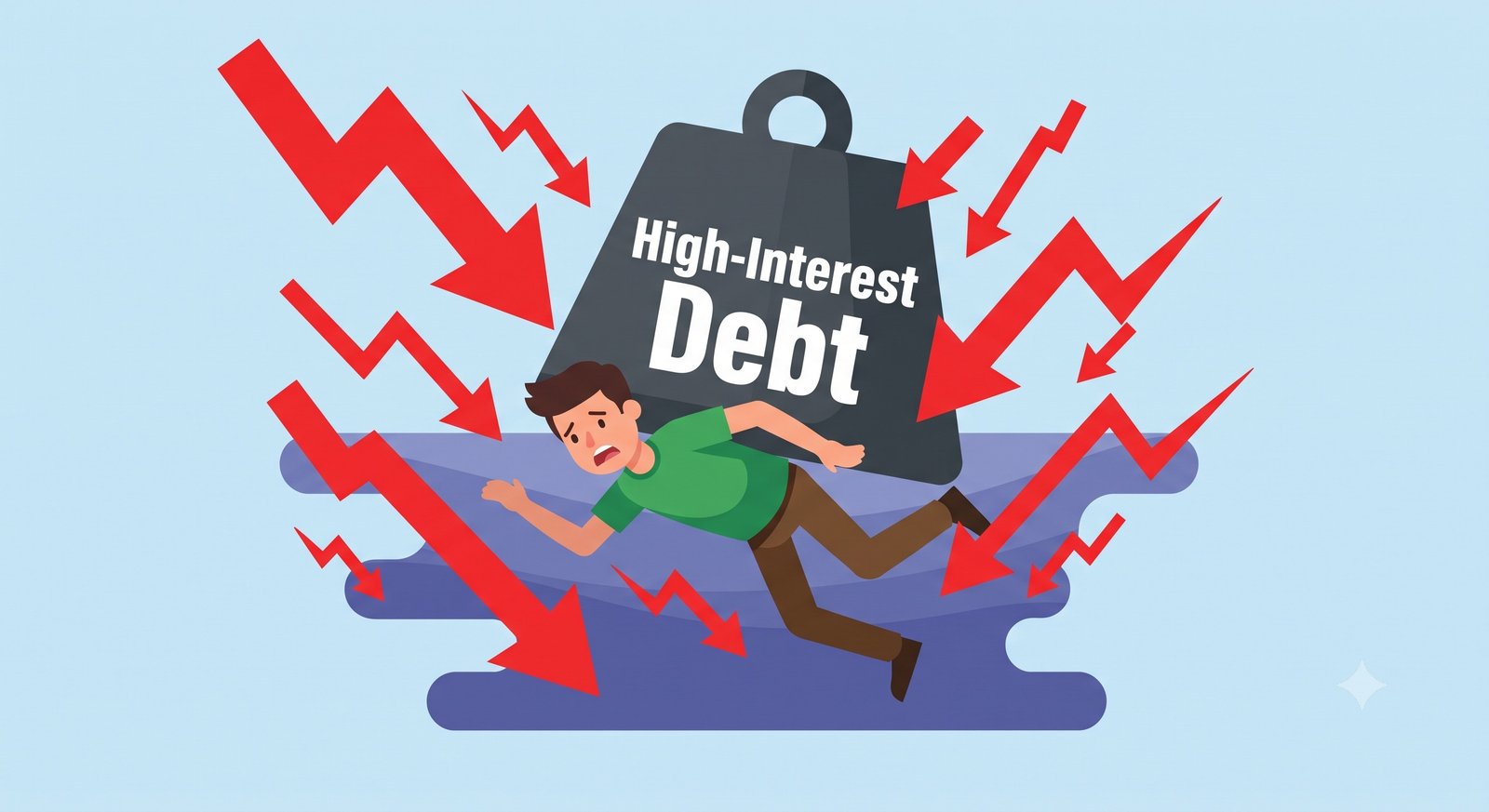
The most common, culturally pervasive, and destructive form of bad debt is carrying a revolving balance on a high-interest credit card to artificially fund lifestyle expenses—such as international vacations, restaurant dining out, or designer clothing. Because credit cards are unsecured debt (lacking collateral), their interest rates are astronomically high to offset the lender's risk. Paying an aggressive 22% annual interest to finance a luxury television that immediately loses half its retail resale value the moment it leaves the store is the absolute antithesis of wealth building. It represents a voluntary, continuous transfer of wealth from the consumer to the bank's shareholders.
5. The "Gray Area": Auto Loans and Strategic Debt Consolidation
While real estate is universally good and credit cards are universally bad, some debts fall directly into a complex gray area and must be evaluated highly contextually based on the borrower's life circumstances.
Auto Loans: Auto loans are traditionally considered bad debt by financial purists strictly because cars are rapidly depreciating physical assets. However, in geographic regions completely lacking functional public transportation infrastructure, a reliable vehicle is fundamentally necessary to travel to work and generate income. In this specific context, financing a modest, reliable used car at a low interest rate operates not as a luxury, but as a necessary operational expense (tolerable debt) required to maintain solvency. Conversely, financing a massive luxury sports car over a dangerous 84-month term at a high interest rate is an egregious, wealth-destroying example of bad debt driven by ego rather than utility.
Debt Consolidation Loans: Consolidation loans also exist squarely in this financial gray area. Taking out an unsecured personal loan at 9% interest to immediately wipe out three credit cards charging 24% interest is a brilliant, highly effective mathematical move that instantly stops the bleeding of capital. However, the trap is entirely behavioral. If the borrower does not simultaneously correct the psychological overspending habits that caused the credit card debt in the first place, the consolidation loan simply becomes a massive new anchor holding them down while they rapidly max out the freshly cleared credit cards again.
6. Structural Comparison: Evaluating Debt Classes
To systematically classify liabilities within a personal or corporate balance sheet, financial planners utilize strict categorization matrices evaluating the purpose, cost, and asset backing of the debt.
| Debt Category | Typical Interest Rate | Underlying Asset Trajectory | Classification & Primary Strategy |
|---|---|---|---|
| Fixed-Rate Mortgage | Low (4% - 7%) | Appreciating (Historically tracks above inflation) | Good Debt. Retain to hedge against inflation; deploy extra cash to equities instead of early payoff. |
| Commercial Expansion Loan | Moderate (6% - 10%) | Income Generating (Positive Cash Flow) | Good Debt. Utilize safely to scale business operations if ROIC exceeds the interest rate. |
| Standard Auto Loan | Moderate (5% - 9%) | Rapidly Depreciating (Loses 20% in Year 1) | Gray Area. Minimize usage. Buy used, keep terms under 48 months, and put 20% down. |
| Credit Card (Revolving) | Extremely High (20% - 29%+) | Consumed immediately (Zero residual value) | Toxic Bad Debt. Eradicate immediately utilizing the Debt Avalanche method. |
7. Empirical Case Studies in Debt Deployment
To fully comprehend the mechanical differences between good and bad debt, we must evaluate them in specific, mathematical real-world scenarios.
Case Study 1: The Inflation Arbitrage (Optimal Good Debt)
Scenario: Elena purchases a $500,000 primary residence. She puts down $100,000 (20%) and finances the remaining $400,000 using a 30-year fixed-rate mortgage at 4.0%. Over the next five years, the localized real estate market appreciates at an average rate of 5.0% annually.
The Mechanics of Wealth Creation: Because of leverage, Elena is not earning 5% on her $100,000 investment; she is earning 5% on the entire $500,000 asset while the bank shoulders the capital risk. By Year 5, the home is worth approximately $638,000. Her initial $100,000 equity investment has more than doubled purely through appreciation, minus the 4% interest she paid to the bank. Furthermore, because inflation has risen, the $400,000 she owes the bank is being paid back with currency that is worth less than the currency she originally borrowed. The debt acted as a massive, subsidized wealth multiplier.
Case Study 2: The Depreciating Asset Trap (Catastrophic Bad Debt)
Scenario: Marcus desires a luxury lifestyle. He finances a brand new $60,000 luxury SUV. To keep the monthly payments superficially affordable, the dealership extends the loan term to 84 months (7 years) at an 8.5% interest rate, requiring zero down payment.
The Mechanics of Wealth Destruction: The moment Marcus drives the vehicle off the lot, it depreciates by 15%, dropping its true market value to $51,000. However, Marcus still owes the bank $60,000 plus compounding interest. He is instantly "underwater" (negative equity). Over the agonizing 84-month term, Marcus will pay nearly $19,500 in pure interest. By the time the loan is finally paid off in Year 7, his total capital outlay is nearly $80,000 for a vehicle that is now worth perhaps $18,000 on the secondary market. The bad debt systematically vaporized over $60,000 of his potential net worth.
8. Actionable Strategy Guide: Restructuring Your Liabilities
Transforming a fragile, highly leveraged personal balance sheet into a fortress of wealth requires the clinical, emotionless execution of debt restructuring. Follow this step-by-step fiduciary blueprint to weaponize your liabilities:
- Step 1: The Liability Audit. Export all of your debts into a master spreadsheet. Document the total principal owed, the exact APR, the minimum monthly payment, and the classification (Good, Bad, or Gray). You cannot optimize what you do not forensically track.
- Step 2: Isolate and Quarantine Bad Debt. Immediately halt all future borrowing for depreciating assets. If you carry a balance on a 25% APR credit card, freeze the physical card. The mathematical bleeding must be cauterized before healing can begin.
- Step 3: Execute the Debt Avalanche. Sort your "Bad Debts" strictly by the highest interest rate (ignoring the total balance). Pay the absolute minimum on all other accounts, and aggressively funnel 100% of your surplus monthly cash flow toward the debt with the highest APR. This mathematically saves you the most money and eliminates toxic liabilities at the fastest possible velocity.
- Step 4: Refinance and Consolidate Gray Area Debt. If you hold a 9% auto loan or a 10% student loan, aggressively monitor prevailing macroeconomic interest rates. If central banks cut rates, refinance those specific installment loans to a lower tier (e.g., 5%) to instantly increase your monthly free cash flow without altering your lifestyle.
- Step 5: Leverage Good Debt Safely. Once bad debt is eradicated, you can deploy "Good Debt" to build wealth. However, do so with immense respect for downside risk. Never over-leverage a property beyond a 28% debt-to-income (DTI) ratio, ensuring that even in a severe recession, the asset generates enough utility or cash flow to service its own debt.
9. Conclusion: The Final Arbiter of Debt
Ultimately, distinguishing between good and bad debt requires a cold, mathematical assessment of the cost of capital versus the expected empirical return. Good debt acts as a formidable financial fulcrum, allowing individuals and corporations to lift heavy, appreciating assets that they otherwise could not afford with raw cash. Bad debt acts as a permanent, compounding tax on future income, forcing the borrower to sacrifice tomorrow's wealth to pay for yesterday's fleeting consumption. By mercilessly identifying and eliminating bad debt, while carefully and strategically deploying good debt, a consumer perfectly aligns themselves with the most powerful wealth-building mechanics in modern finance.
10. Frequently Asked Questions (FAQ)
Q: If I pay off my credit card in full every month, is it still considered "Bad Debt"?
No. If you pay your statement balance in full before the grace period expires, you are avoiding all interest charges. In this specific scenario, the credit card acts purely as a highly secure, frictionless transactional vehicle rather than a debt instrument. You are essentially using the bank's money for 30 days for free while earning rewards. It only transforms into "Bad Debt" the exact second you carry a balance and trigger compound interest.
Q: Should I pay off my 3% fixed-rate mortgage early if I have extra cash?
From a strict, emotionless mathematical standpoint, no. A 3% mortgage is prime "Good Debt." If you have $50,000 in surplus cash, using it to pay down a 3% loan saves you 3% in interest. However, if you deploy that exact same $50,000 into a broad-market S&P 500 index fund, historical averages suggest it will yield 8% to 10% annually over a decade. By paying off the low-interest mortgage early, you suffer a massive "opportunity cost" by forfeiting the higher yield you could have captured in the equity markets. Furthermore, inflation actively destroys the true cost of that 3% debt over 30 years.
Q: Are personal loans considered good or bad debt?
A personal loan is completely agnostic; its classification depends entirely on its utilization. If you take out a $15,000 personal loan at 10% to fund a lavish destination wedding, it is horrific bad debt, destroying future cash flow for a 7-day consumable event. However, if you take out that exact same $15,000 loan at 10% to completely consolidate and pay off three maxed-out credit cards charging 25%, it operates as strategic, tolerable debt that stops catastrophic financial bleeding.
Q: Is borrowing money to invest in the stock market (Margin Trading) a good idea?
While technically classified as leverage (Good Debt) because you are attempting to acquire appreciating assets, margin trading introduces extreme, often unacceptable systemic risk. If the stock market drops suddenly, your broker can issue a "Margin Call," forcing you to deposit more cash instantly or they will liquidate your assets at the absolute bottom of the market to cover their loan. The volatility of equities makes them highly dangerous collateral for debt compared to the slower, stable appreciation of real estate.
Q: How does inflation make my fixed-rate "Good Debt" better?
Inflation decreases the purchasing power of fiat currency over time. If you lock in a 30-year fixed-rate mortgage today, your monthly payment remains exactly $2,000 for three decades. However, due to inflation, your salary and the cost of goods will likely double over those 30 years. This means the $2,000 you pay the bank in Year 25 requires a drastically smaller percentage of your total income than it did in Year 1. You are legally paying the bank back with "cheaper," devalued dollars. This phenomenon is known as "Debt Debasement," and it is the ultimate hidden benefit of long-term, fixed-rate leverage.
See also
- Loading related topics...